No mystery, no locked doors. This is exactly what happens to your rug between pickup in Weston and delivery back to your living room — with photos from our own floor, not stock images.
Stage one
Everything that could go wrong later, we check first.
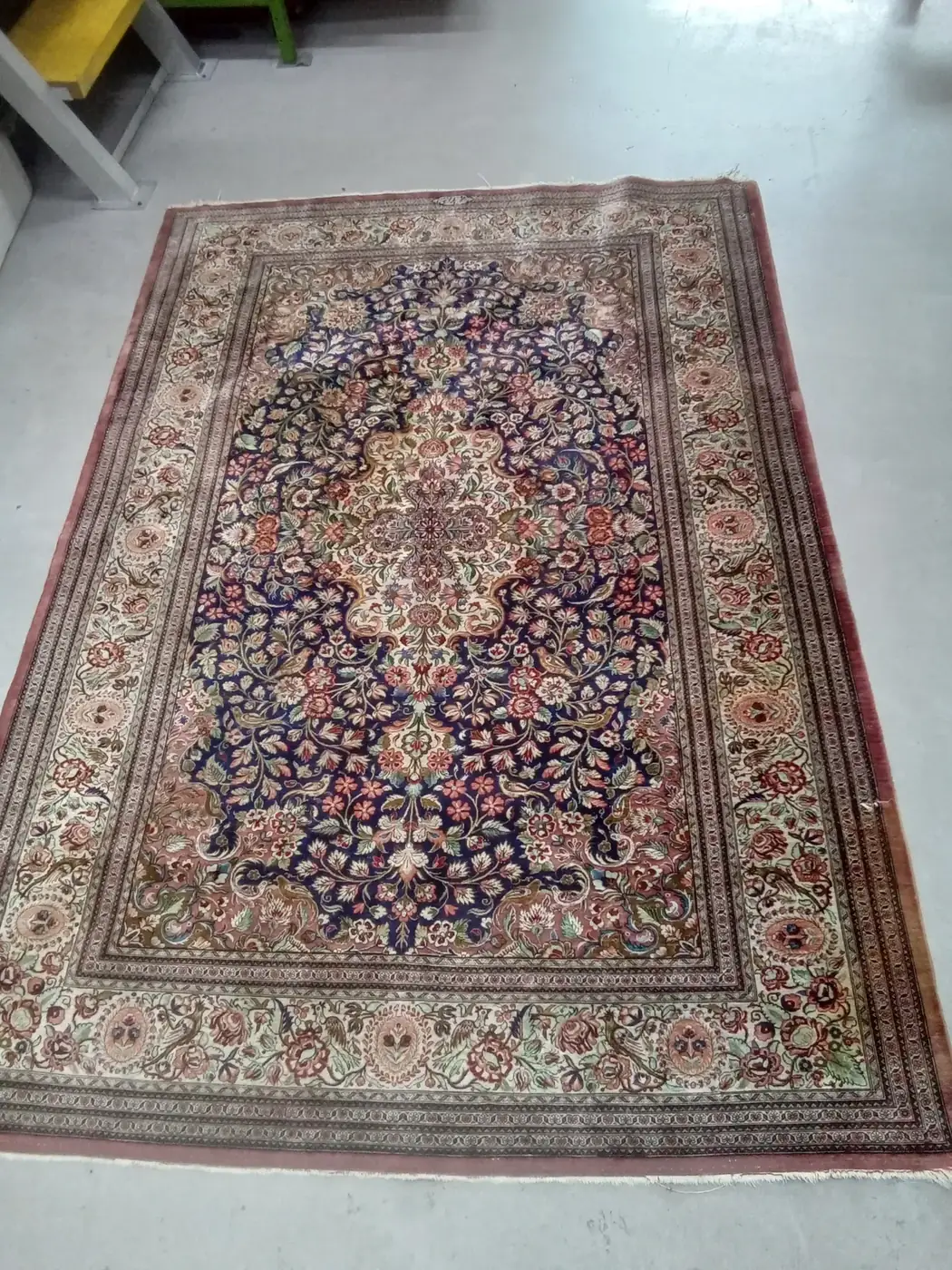
The rug is measured and examined edge to edge: wear patterns, existing spots, loose fringe, weak sides, pet contamination. Then two tests most rug owners have never seen done.
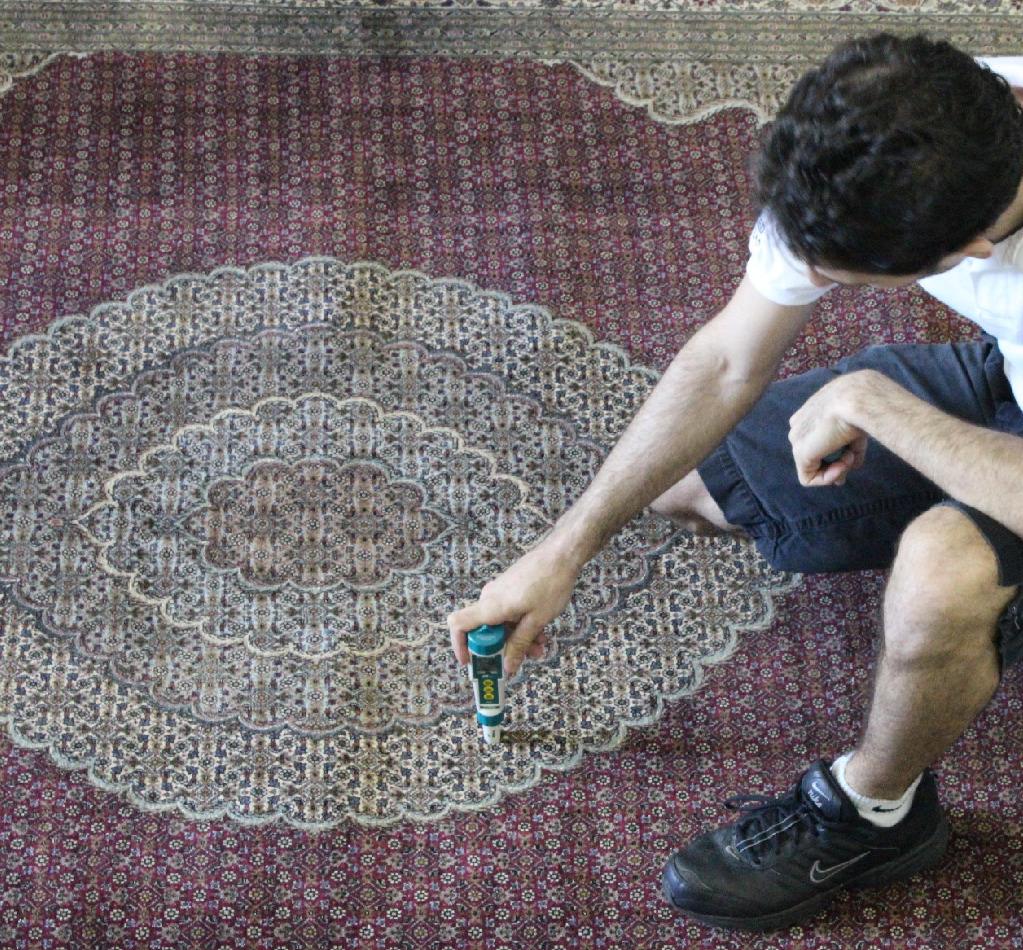
The pH test. We meter the rug’s fiber before choosing a cleaning solution. Wool and silk are protein fibers — hit them with the high-alkaline chemicals used on synthetic carpet and they get harsh, brittle, and dull. Our wash chemistry stays in the natural pH range delicate rugs can handle.
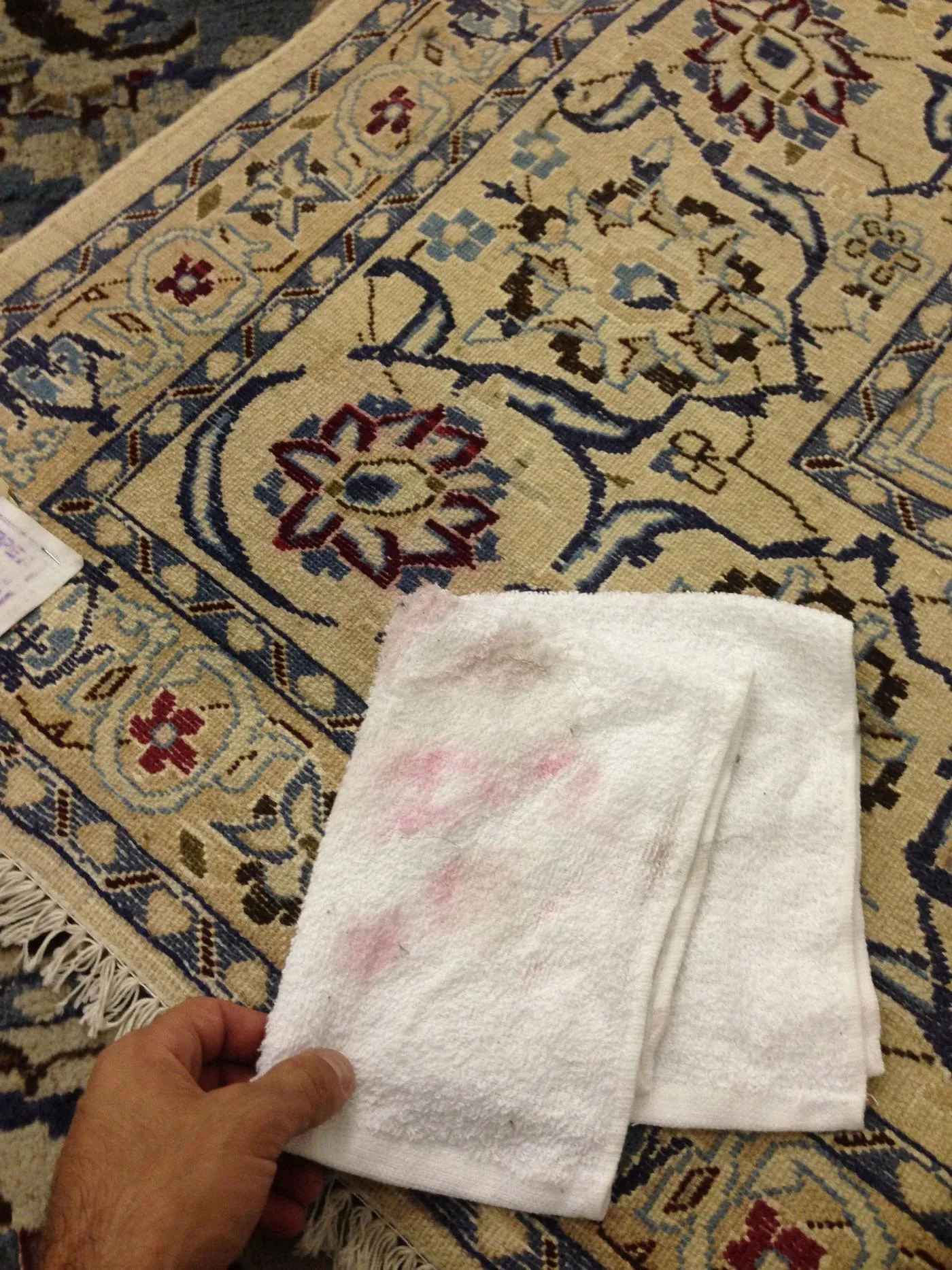
The dye-stability test. A damp white towel, pressed on the pile. If color transfers, the rug is a bleeder — common with older vegetable-dyed Persians — and it gets a modified wash that keeps reds from crawling into ivories.
Only after testing do we set the price. In writing, before any work.
Stage two
Because water turns dry grit into mud.
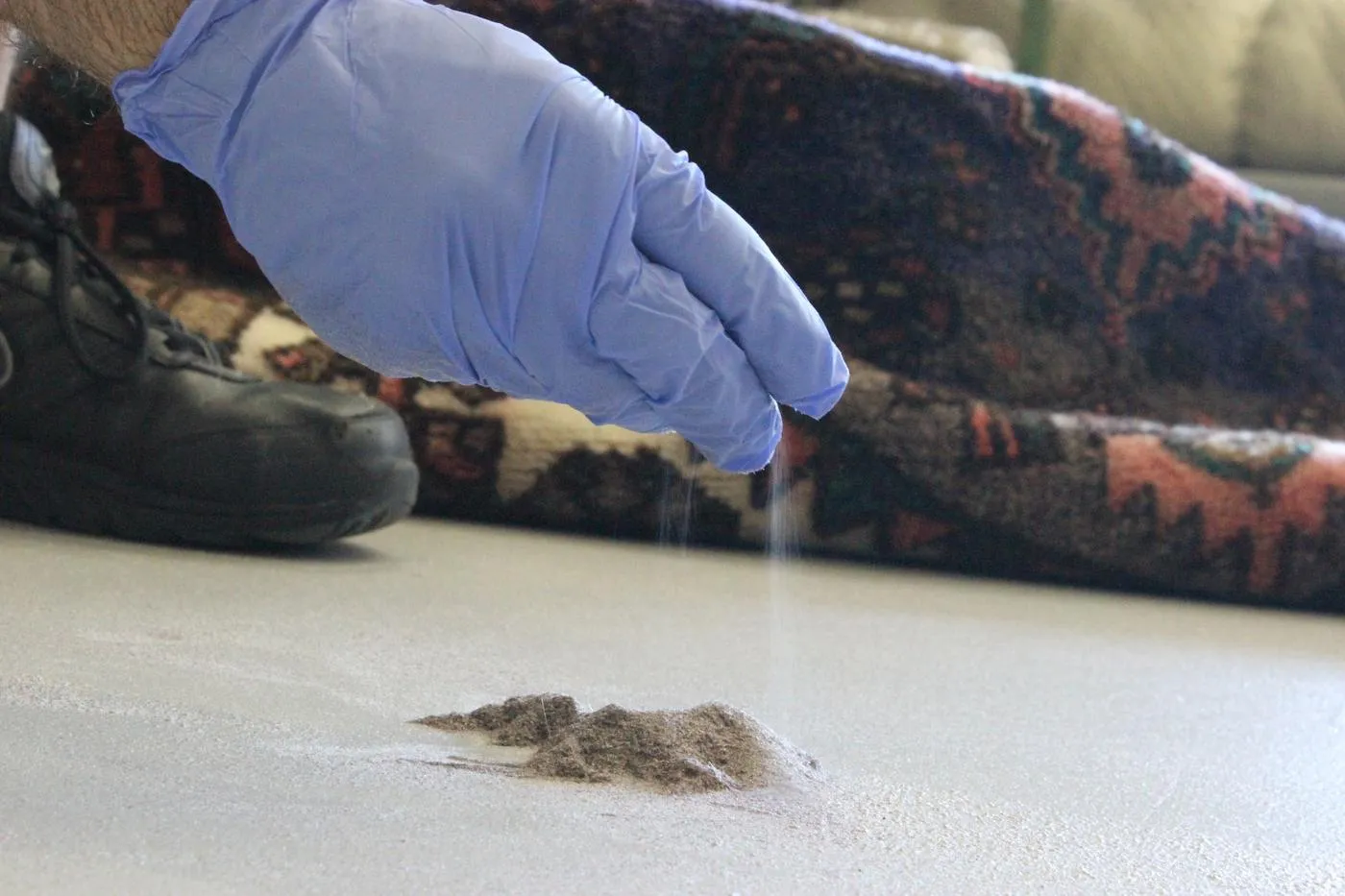
South Florida sand works down through the pile and collects in the rug’s foundation, where vacuums can’t reach it. Wash a rug without removing it and you’re rinsing mud through the fibers — and that grit keeps cutting at the knots like sandpaper every time someone walks across the rug.
So before any water, the rug is dusted: mechanically beaten and vacuumed from both sides until the foundation stops giving up soil. What comes out of a “clean-looking” rug surprises people every time.
Stage three
A real wet wash, on the shop floor — not a spray-and-vac.
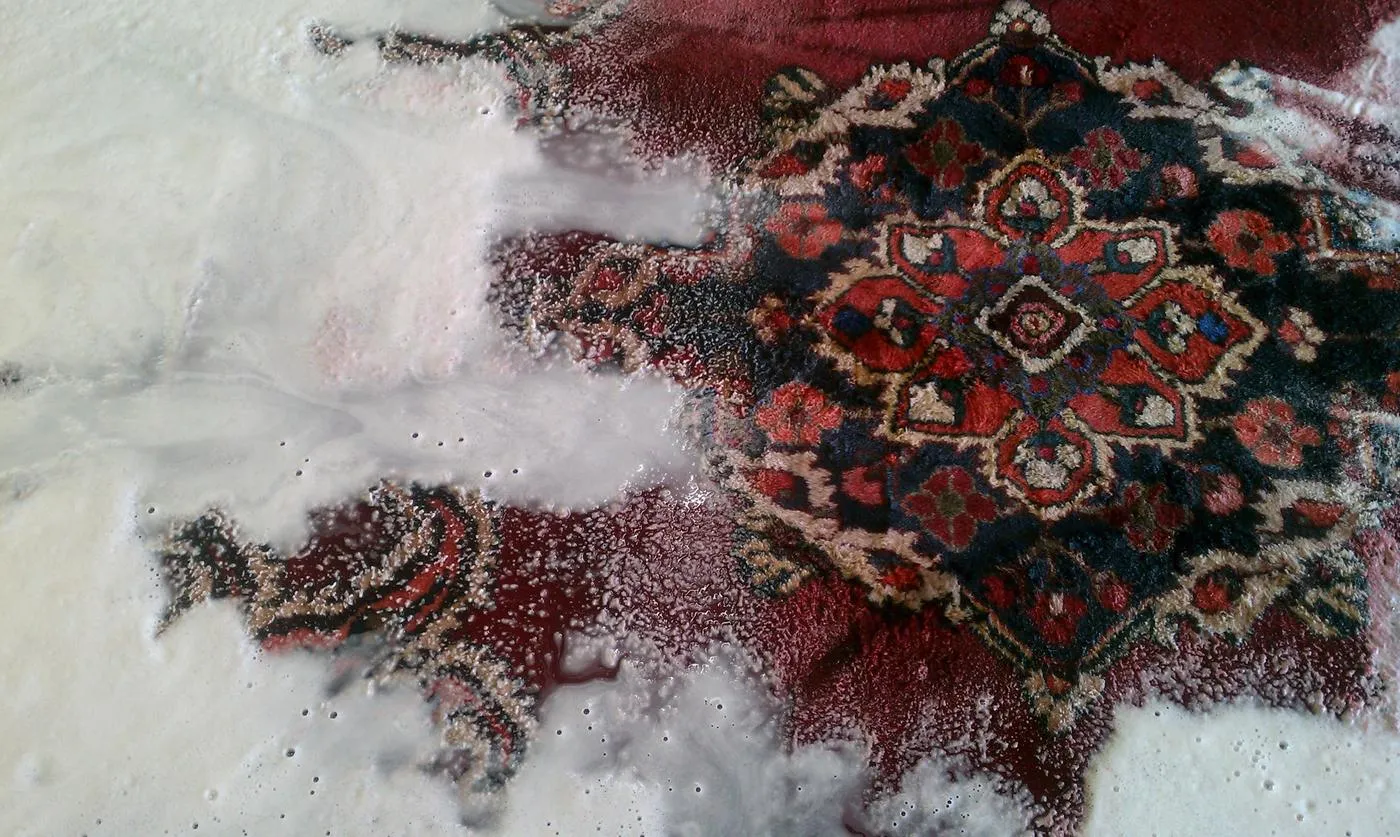
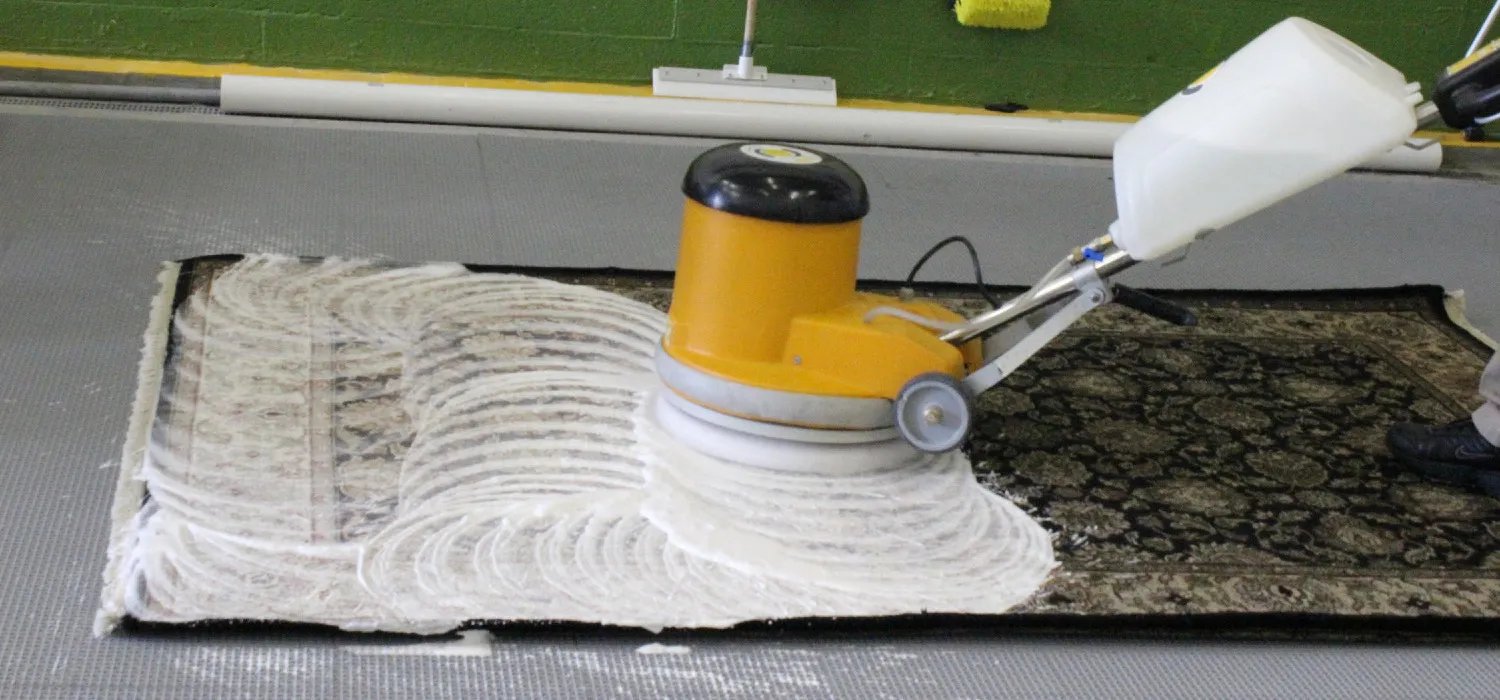
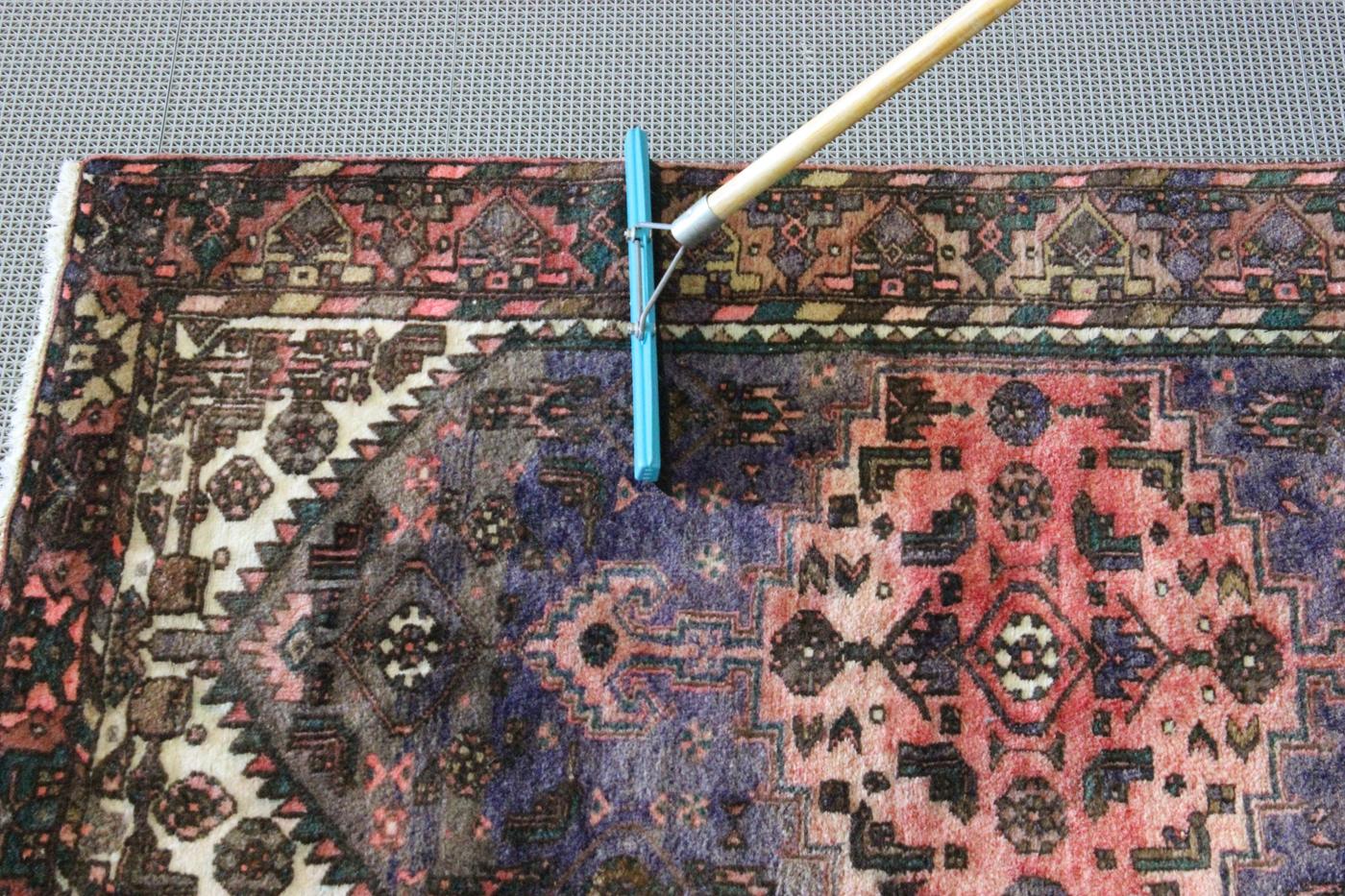
The rug is flooded, shampooed with the natural pH solution the tests called for, and worked through the pile so the cleaning reaches the foundation, not just the tips. Stubborn areas get hand attention; delicate silks get a gentler touch and softer tools.
Then everything is rinsed until the water runs clear. Shampoo left in a rug attracts soil, so the rinse matters as much as the wash.
Stage four
Fast, and on purpose.
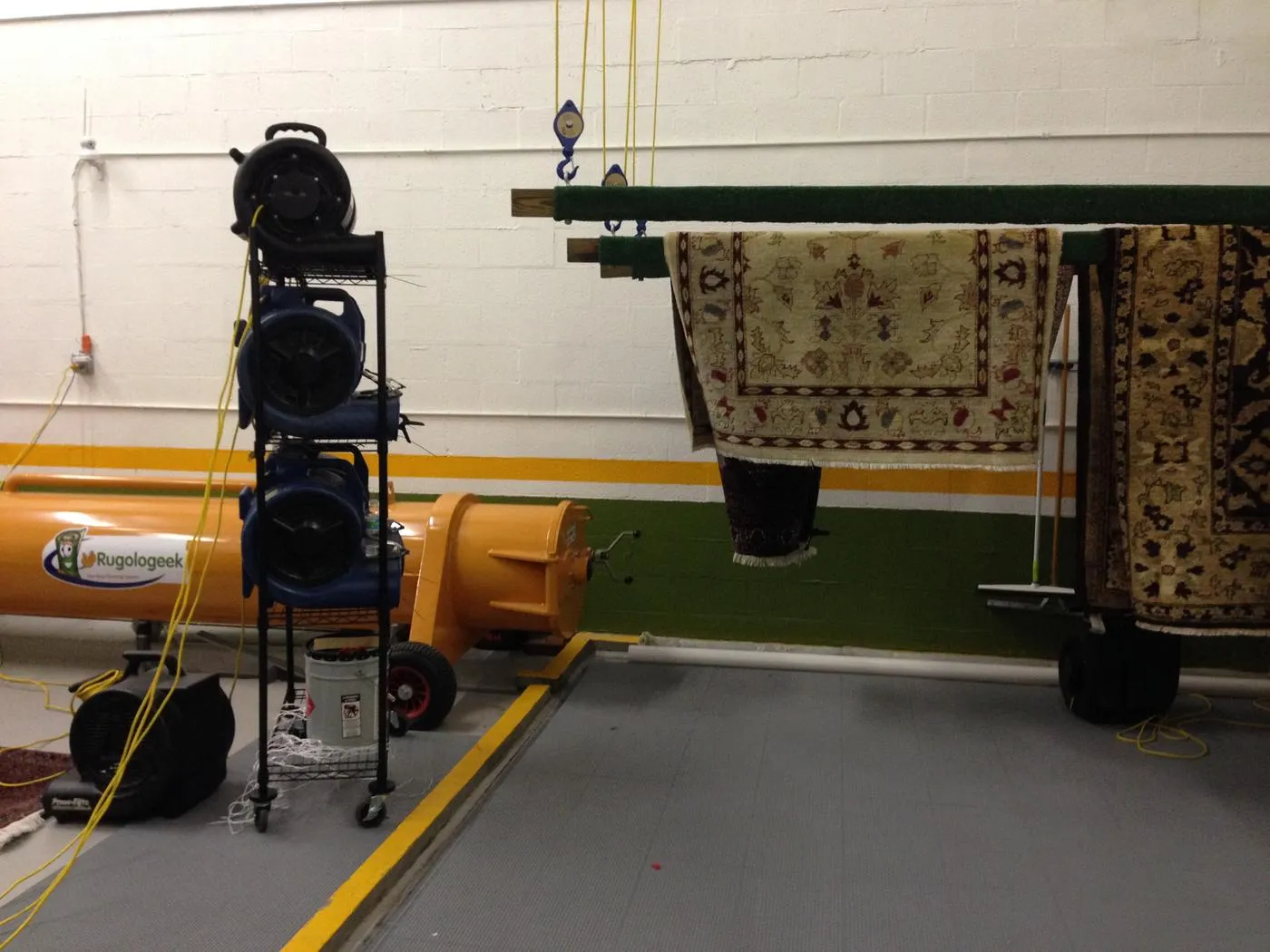
A wet rug left to dry slowly in Florida humidity is where dye migration and mildew happen. Our drying room is temperature and humidity controlled, with rugs hung on poles and air movers running until the foundation — not just the surface — is bone dry.
Controlled speed drying is the single biggest reason a washed rug comes back with its colors crisp instead of muddied.
Stage five
We put our hands on every inch of it.
The pile is brushed to lift and set the nap, fringes are combed out, and the rug gets a final inspection against the notes from stage one. If we flagged a repair at intake — loose fringe, a worn edge — this is where you see the finished work.
Then it’s rolled, wrapped, and delivered back to your home. Large-rug delivery is free anywhere in Broward County. More photos from the floor are in the gallery.
The honest part
Sometimes the right answer is “don’t spend the money.”
A low-cost machine-made rug near the end of its life, a synthetic that a careful in-home cleaning can handle, dry rot so advanced that washing would do more harm than good — we see all three, and we say so at the pre-inspection.
We’d rather lose a job than wash a rug that shouldn’t be washed. That’s how this shop has kept its neighbors since 1997.